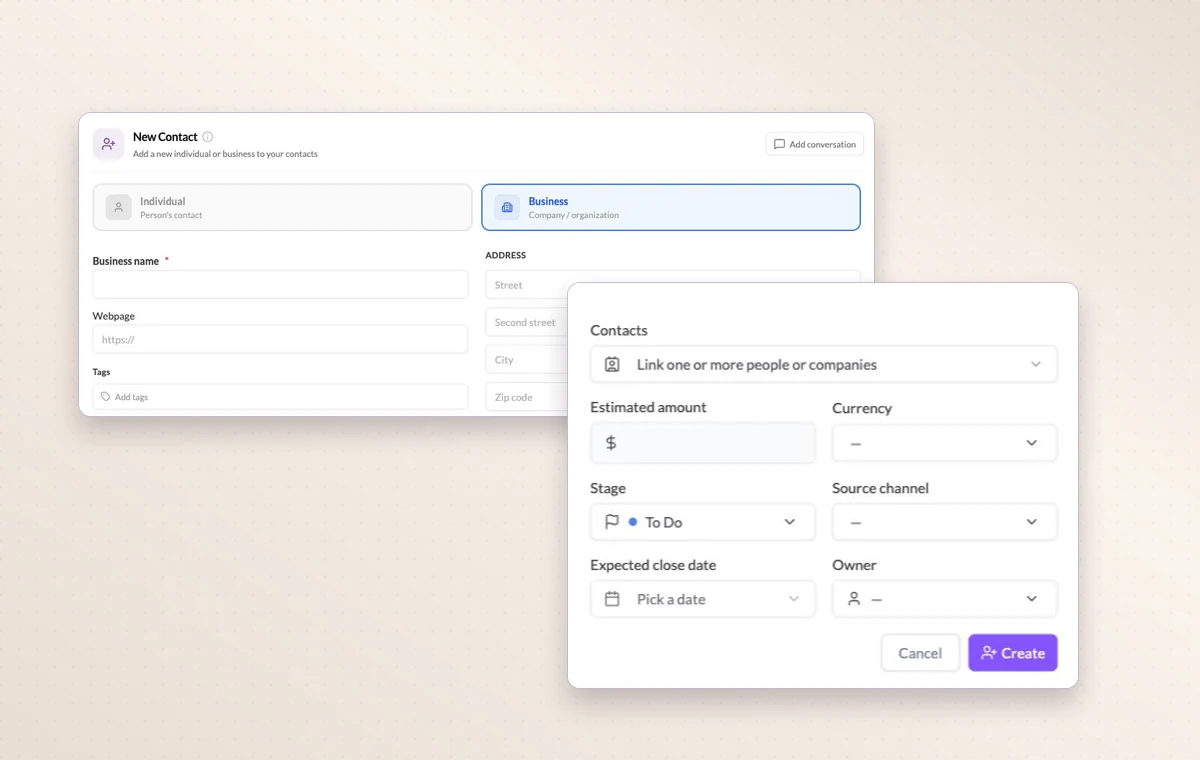
You promised an answer by Friday. Record who owns the opportunity in GGyess and schedule the next call. If you’re away, a colleague can keep that promise with the same details at hand.
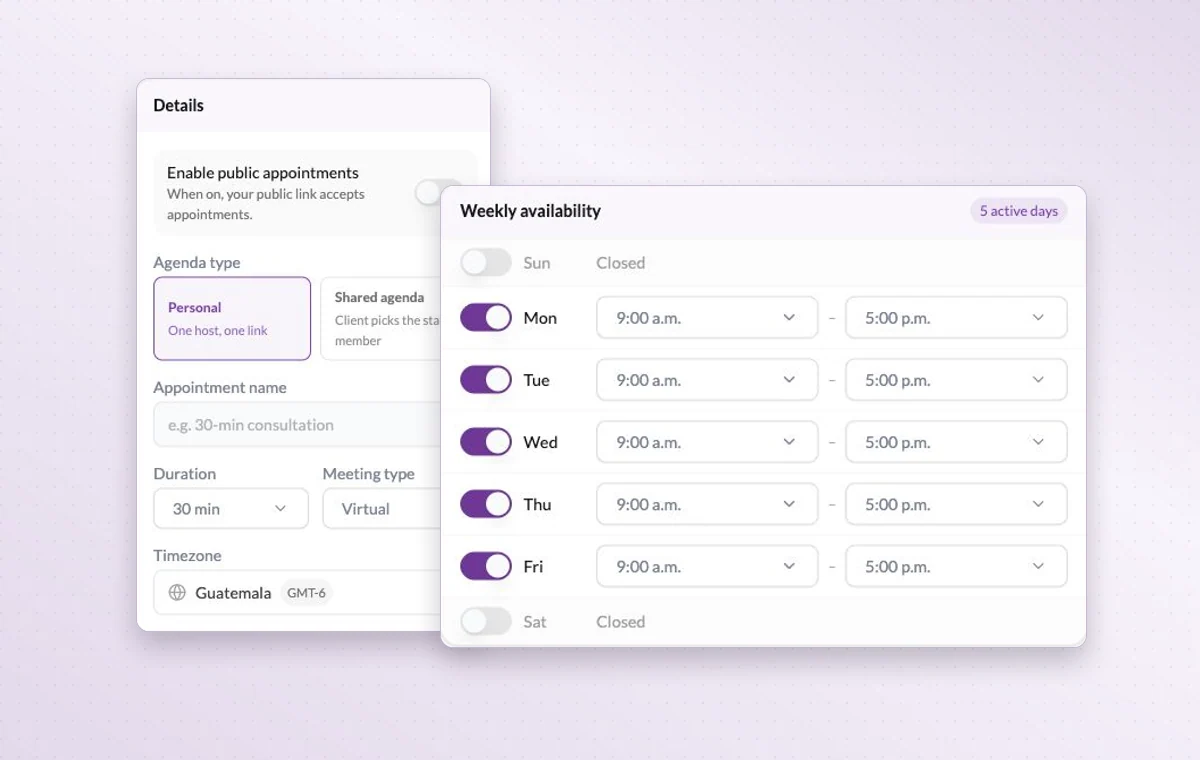
Appointment settings with personal and shared agendas and weekly availability.
Sales teams
In day-to-day work
Know where a deal stands
Record the contact, estimated value and stage of each opportunity. The next follow-up starts with a clear picture of the deal.
The person behind the account
Link a contact to their company and record what matters in the notes. A teammate can take the next call knowing who they’re speaking with.
Remember the follow-up
Set a reminder when you promise to check back, or add one to a task with a deadline. You have a place for the next step while the conversation is still fresh.
Before you start
A few good questions.
How should a rep hand an opportunity to a colleague?
Update the opportunity owner, make sure the company and contacts are linked, and record the action the new owner has agreed to take.
What does the estimated value represent?
It’s the amount you expect if the sale goes through. Update it as the deal develops and handle invoicing in your financial system.
With your permission, we use Google Analytics to see which pages people visit and whether they click the registration buttons. Google Ads measures visits from ads. With separate permission, Google Signals can associate this visit with a signed-in Google account for aggregate reports. With your permission, Microsoft Clarity may record clicks and scrolling to replay your visit.Cookie policy.