GGyess
Task priority

When everything feels urgent, agree on what comes first.

Two requests arrive at once and each person needs theirs first. Agree on what each level means, then mark the priority on the task so the whole team can see the decision.

Inside GGyessEnlarge screenshot
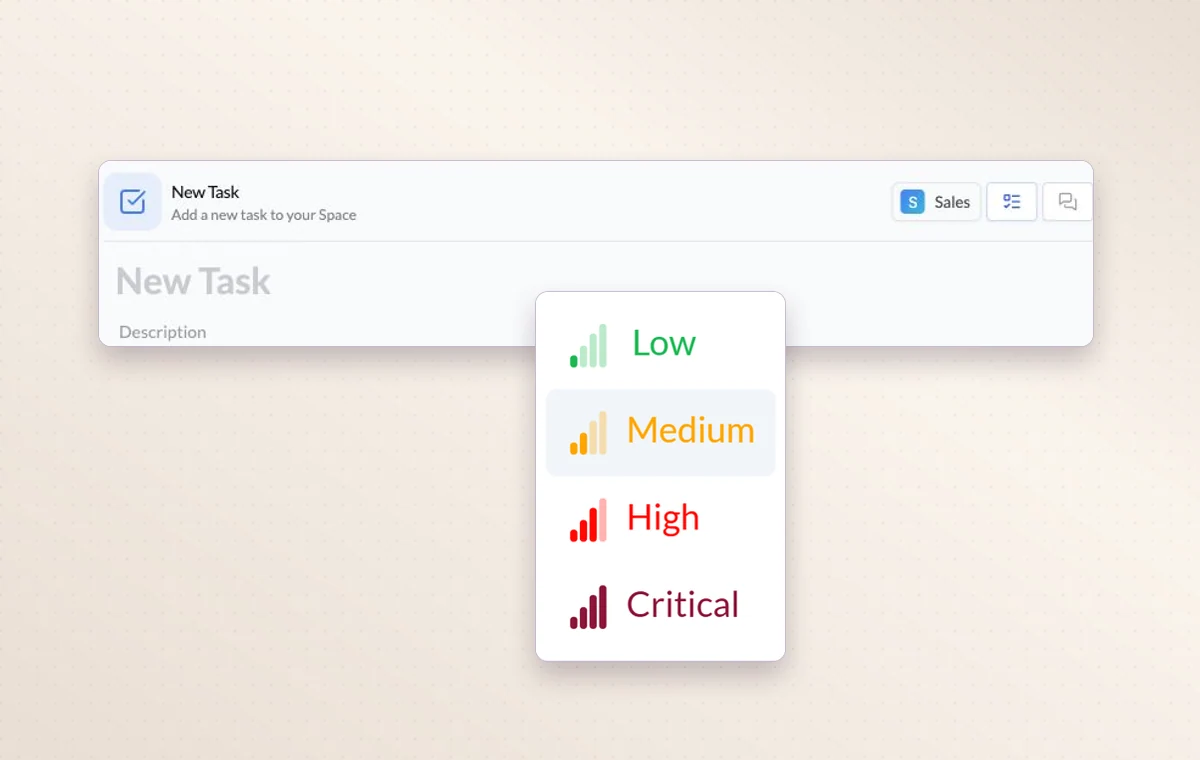
A task with four available priority levels, from low to critical.
Choose from four task priority levels, from Low to Critical.
Step by step

Distinguish an urgent issue from routine work

  1. Agree what each priority means for your team.

  2. Choose the appropriate level on the task.

  3. Filter or sort the list when reviewing urgent work.

Inside GGyessEnlarge screenshot
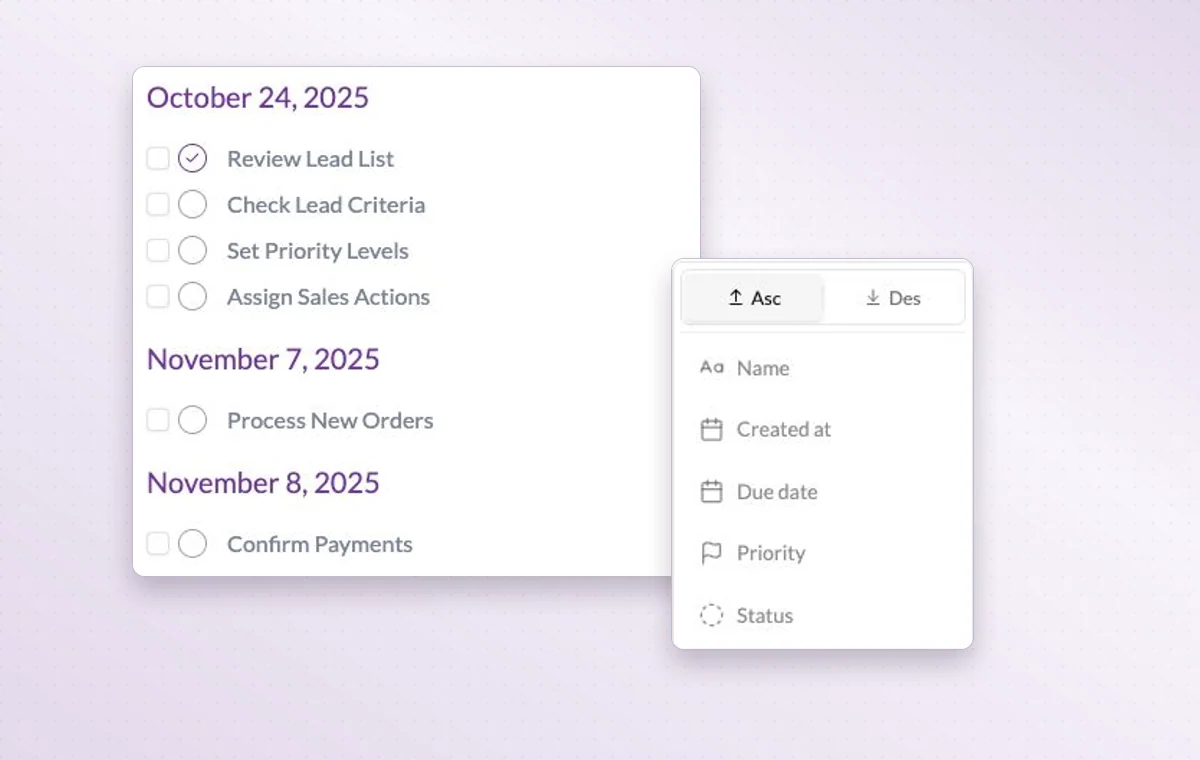
A task list alongside the sorting options for name, creation date, deadline, priority and status.
Task priority

In day-to-day work

Give urgent work a place

Use the four levels from Low to Critical. Filter by priority when the team needs to decide which deadline to tackle first.

Put the next deadline first

Sort by due date when time matters, by priority or status for a review, or by name and creation date when looking for a particular item.

A start and a deadline

Set both dates on the task. The person doing the work can plan a start and the person waiting for it knows when it’s due.

Before you start

A few good questions.

Does priority replace a deadline?

Priority describes importance. A due date tells the team when the work is expected. Set both when a delivery has a fixed commitment.

Can I look at tasks separately from appointments?

Yes. The event type filter lets you select tasks, appointments, reminders and other activity types.

GGyess WorkSuite

Give the team a clear starting point.

Start on the free plan. Invite your team when you’re ready.

GGyess screenshot